Heat Loss Surveys — Identify Where Energy and Money Are Being Wasted
Environ Industries conducts practical heat loss surveys to help businesses identify where poor, damaged, missing, or underperforming insulation is costing money. We inspect real site conditions across Melbourne and deliver clear recommendations that support better plant efficiency, safer assets, and smarter maintenance decisions.
Find the Heat Loss Before It Keeps Costing You
A heat loss survey inspects your site and identifies exactly where insulation is missing, damaged, or underperforming. We document surface temperatures across pipework, valves, vessels, heat exchangers, and mechanical services — giving you a clear picture of where energy is being wasted and what practical insulation improvements would deliver.
Each finding is documented with a side-by-side photograph and thermal image, showing the actual surface temperatures involved. This makes it straightforward to prioritise insulation improvements, support better maintenance decisions, and reduce unnecessary energy waste across industrial plant and process environments.
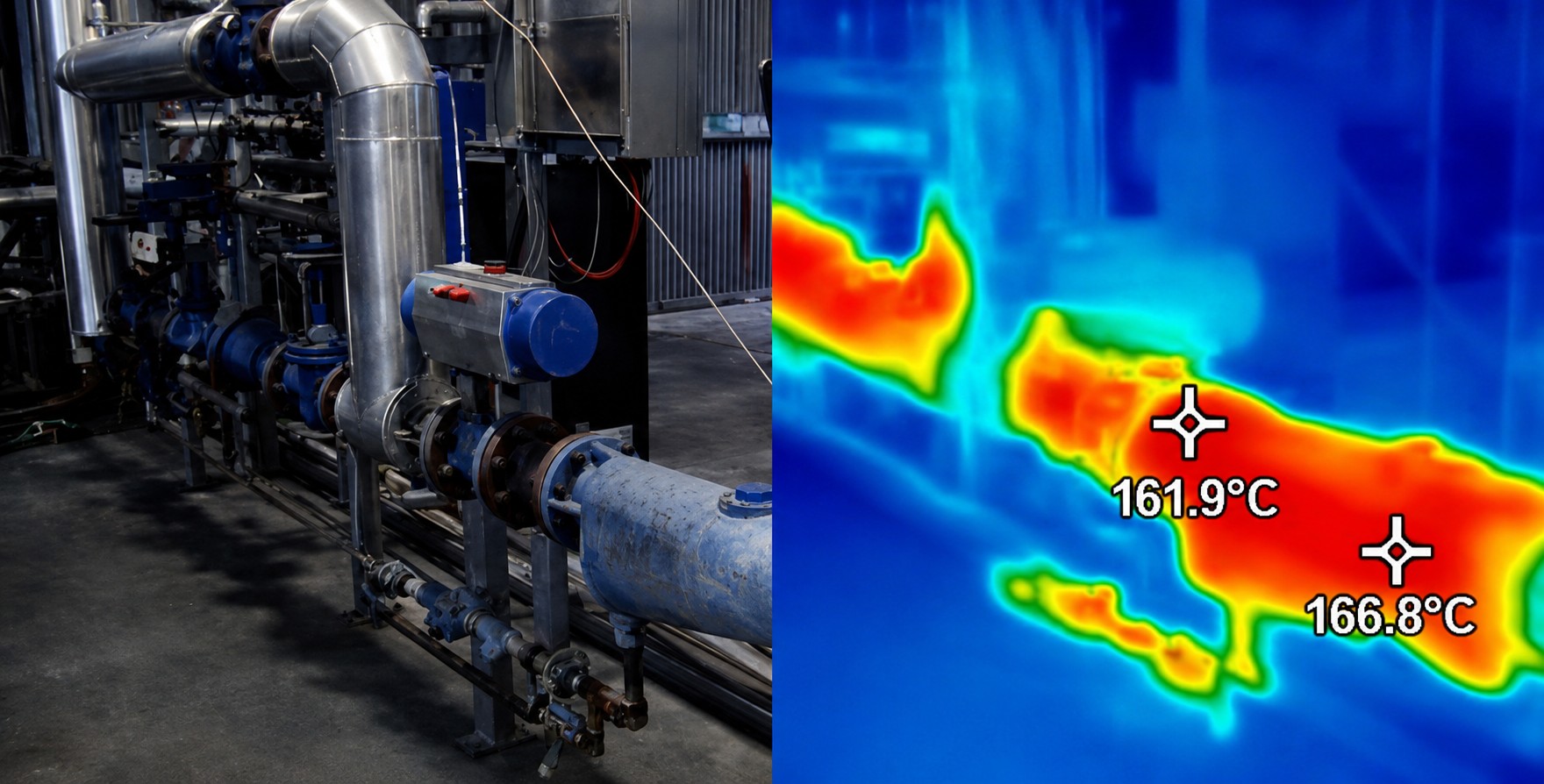
Practical Site Assessment, Clear Recommendations
Every finding includes a standard photograph and a thermal image with measured surface temperatures. These examples show real survey findings — each one a direct opportunity to reduce heat loss and cut operating costs.
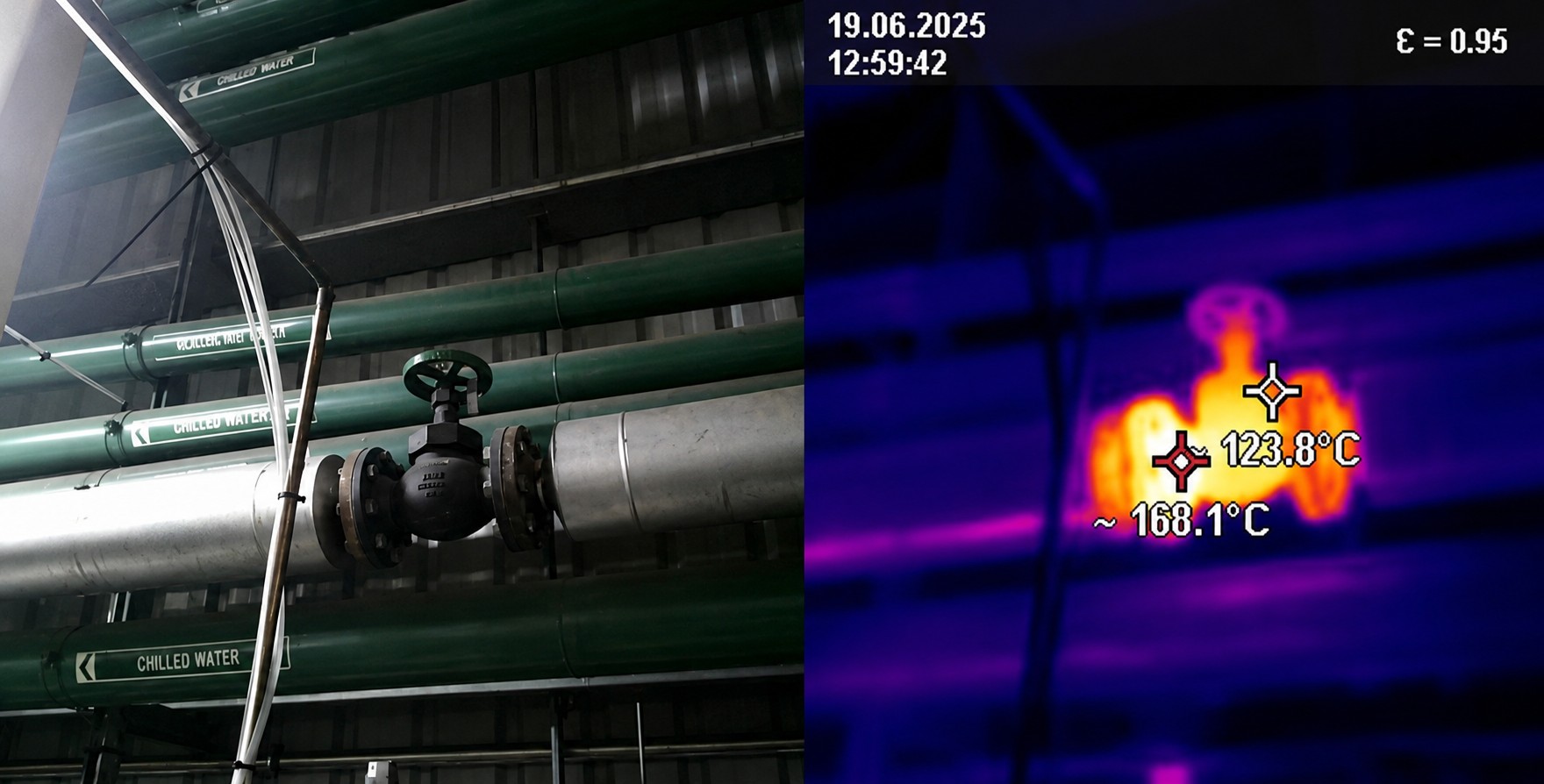
Exposed valve — 168°C
Uninsulated hot water valve radiating at 168°C. Removable insulation jackets would eliminate this heat loss entirely.
Pipe run — 166°C
Completely uninsulated pipe run confirmed at 166°C — the highest reading on this survey. An immediate priority.
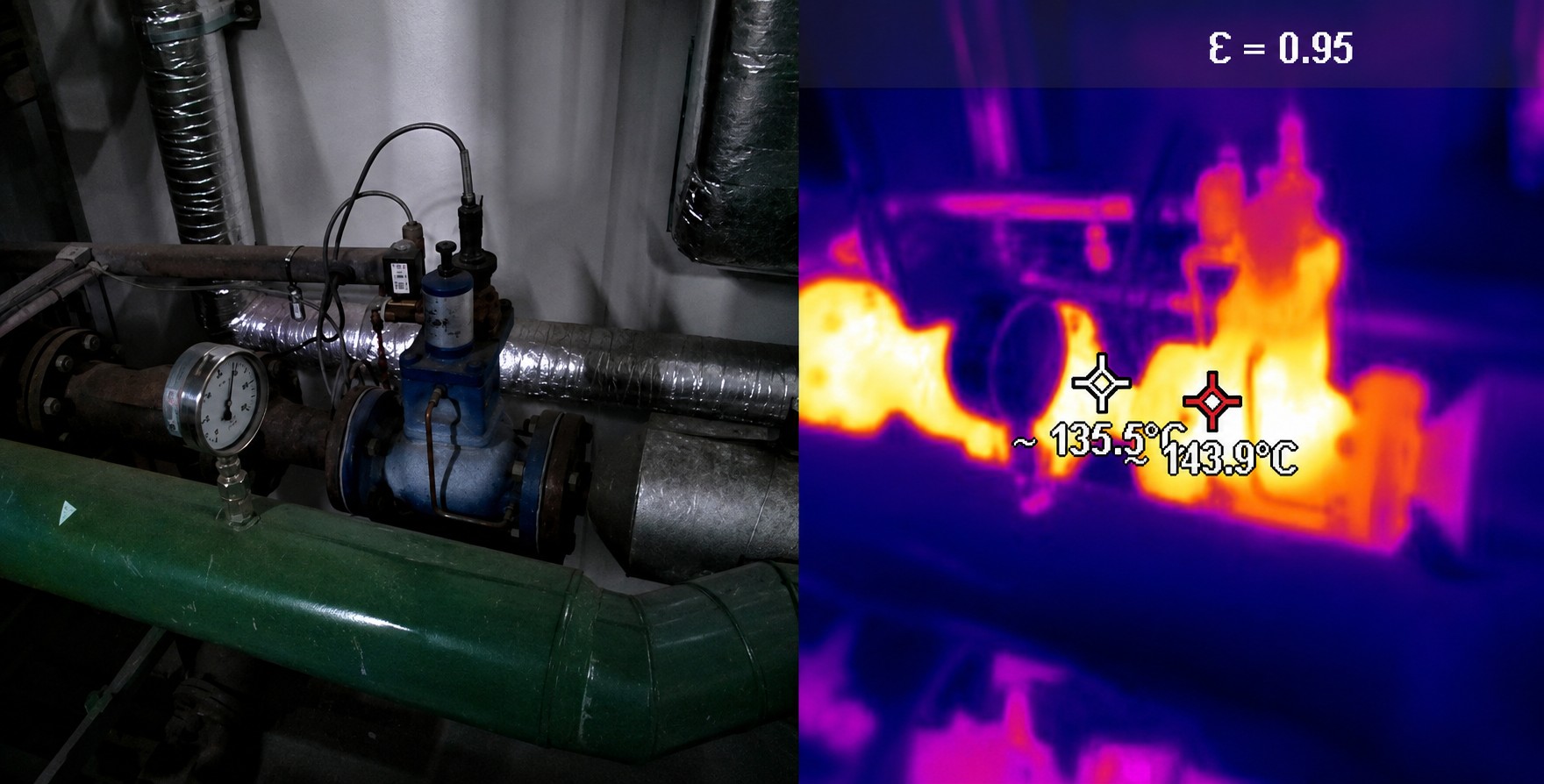
Pump assembly — 143°C
Uninsulated pump at 143°C. Continuous energy loss plus a safety hazard for maintenance staff.
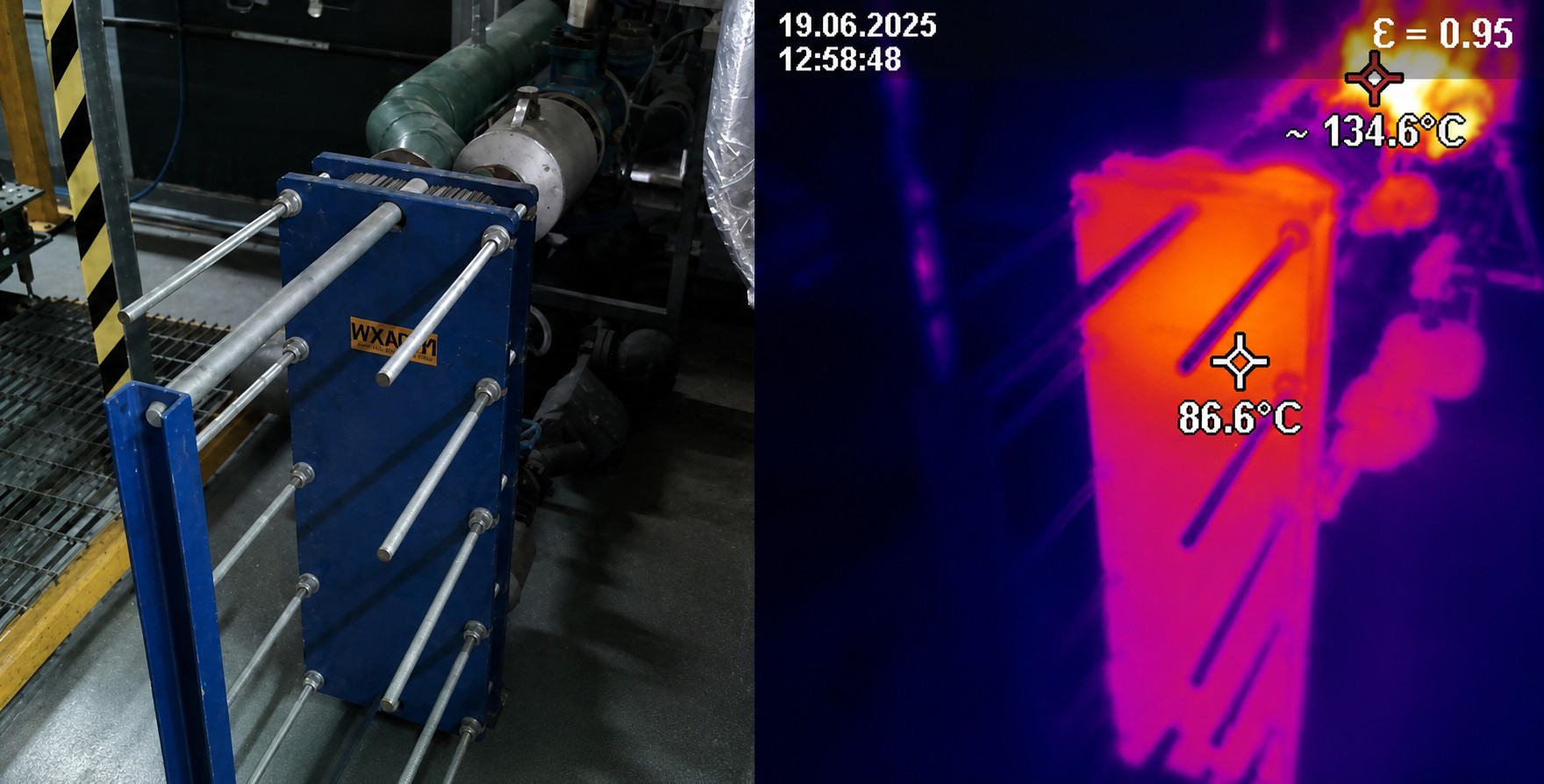
Heat exchanger — 134°C
Uninsulated plate heat exchanger running at 134°C — significant heat loss on a component that should be insulated.
Turn Insulation Performance Issues Into Practical Improvements
The value of a heat loss survey comes from knowing exactly where the problems are, how severe they are, and what addressing them would deliver. Environ gives you that information clearly — a site-specific findings list focused on reducing energy waste, improving industrial plant efficiency, and helping you prioritise practical insulation upgrades.

Identifies missing, damaged, and underperforming insulation
Locates exposed hot surfaces and heat loss points across the site
Helps prioritise insulation improvements by severity and cost impact
Supports energy efficiency improvements with actual site data
Useful for maintenance planning and capital expenditure budgeting
Improves site safety by identifying exposed hot surface hazards
Provides a clear basis for insulation upgrade scoping and costing
Better Data for Maintenance, Safety and Cost Control
A heat loss survey is useful any time you need to understand the insulation condition of a site — whether that is pre-shutdown planning, budget prioritisation, post-installation verification, or simply finding out where energy spend can be reduced.
- Industrial process plant and equipment
- Pipework, valves, and mechanical services
- Plant rooms and mechanical spaces
- Steam and hot water distribution systems
- Boilers, vessels, and tanks
- Pre-maintenance and pre-shutdown planning
- Post-insulation verification and performance checking
Thermal Imaging
Calibrated thermal camera used to measure and document actual surface temperatures across the site.
Side-by-Side Documentation
Each finding paired with a standard photo and thermal image for clear, unambiguous reporting.
Actionable Findings List
Survey output focused on practical next steps — not just data, but clear upgrade recommendations.
Prioritised by Severity
Findings ordered by temperature, risk, and opportunity — so you can address the highest-impact issues first.
Related Services
A heat loss survey helps identify where pipe insulation, removable jackets and cladding improvements will deliver the most value.
Identify Potential Heat-Loss Areas on Your Industrial Site
Book a heat loss survey with Environ. We assess insulation performance across your site, document where energy is being wasted, and give you clear recommendations on practical improvements.